Universidade Lusófona do Porto
About Public events and group emotions
Do Acontecimento
Louis Quéré
November
2021
Tue
16
Sinopse
Public events and collective emotions
Many of the events that affect us are not directly experienced by us. They are reported to us, presented (in texts, speeches, images) and commented on by the media. And yet such events touch us, as well as arouse somewhat similar emotions in the media audience. These emotions can trigger individual behaviors and collective actions of various kinds. How to explain, on the one hand, the emotional power of certain public events and, on the other, the convergence of the emotional reactions that arise when there is no face-to-face meeting? What nature are these collective emotions? To answer these questions, I will rely, in part, on the work of Gérôme Truc (whose doctoral thesis I co-advised) on reactions to terrorist attacks and, eventually, on other cases. I will also discuss the argument that, in our societies today, the reception of events is increasingly exclusively emotional. — Louis Quéré
Do Acontecimento
At a time of calculation, rules and prevention all of a sudden emerges the unexpected, something that disrupts the course of events and threatens the flow of life. In a sort of paradox, the more one anticipates the accident, the more catastrophic and unmanageable it is when it occurs. It is understandable that in this respect the notion of Event, contingent and unpredictable, has been gaining ground to account for forces that exceed historical forms, either coming from Nature, like a catastrophe, or from within the history we make, widespread as a fire or an epidemic. There’s a certain amount of panic in the face of excessive force and the weakness of forms, even if a considerable part of human culture has been based on the wait for a decisive event, a revolution, through which peace or justice may triumph once and for all. Some bare witness to it, others announce it, and others lose all hope tired of waiting. Only art, thought and technique are able to respond to the Event and create the labyrinth where—much like the ancient Minotaur—we can be close to it and its power without the illusion of cancelling or controlling it.
Louis Quéré (1947) is a French sociologist, research emeritus director of the French National Centre for Scientific Research (CNRS) and former director of the Marcel Mauss Institute (EHESS-CNRS). His research mainly focuses on sociology of action, epistemology of social sciences and ethnomethodology. His approach falls within the legacy of the thinking of Jürgen Habermas, the hermeneutics of Hans-Georg Gadamer, and the pragmatism of John Dewey and George Herbert Mead.
Many of the events that affect us are not directly experienced by us. They are reported to us, presented (in texts, speeches, images) and commented on by the media. And yet such events touch us, as well as arouse somewhat similar emotions in the media audience. These emotions can trigger individual behaviors and collective actions of various kinds. How to explain, on the one hand, the emotional power of certain public events and, on the other, the convergence of the emotional reactions that arise when there is no face-to-face meeting? What nature are these collective emotions? To answer these questions, I will rely, in part, on the work of Gérôme Truc (whose doctoral thesis I co-advised) on reactions to terrorist attacks and, eventually, on other cases. I will also discuss the argument that, in our societies today, the reception of events is increasingly exclusively emotional. — Louis Quéré
Do Acontecimento
At a time of calculation, rules and prevention all of a sudden emerges the unexpected, something that disrupts the course of events and threatens the flow of life. In a sort of paradox, the more one anticipates the accident, the more catastrophic and unmanageable it is when it occurs. It is understandable that in this respect the notion of Event, contingent and unpredictable, has been gaining ground to account for forces that exceed historical forms, either coming from Nature, like a catastrophe, or from within the history we make, widespread as a fire or an epidemic. There’s a certain amount of panic in the face of excessive force and the weakness of forms, even if a considerable part of human culture has been based on the wait for a decisive event, a revolution, through which peace or justice may triumph once and for all. Some bare witness to it, others announce it, and others lose all hope tired of waiting. Only art, thought and technique are able to respond to the Event and create the labyrinth where—much like the ancient Minotaur—we can be close to it and its power without the illusion of cancelling or controlling it.
Louis Quéré (1947) is a French sociologist, research emeritus director of the French National Centre for Scientific Research (CNRS) and former director of the Marcel Mauss Institute (EHESS-CNRS). His research mainly focuses on sociology of action, epistemology of social sciences and ethnomethodology. His approach falls within the legacy of the thinking of Jürgen Habermas, the hermeneutics of Hans-Georg Gadamer, and the pragmatism of John Dewey and George Herbert Mead.
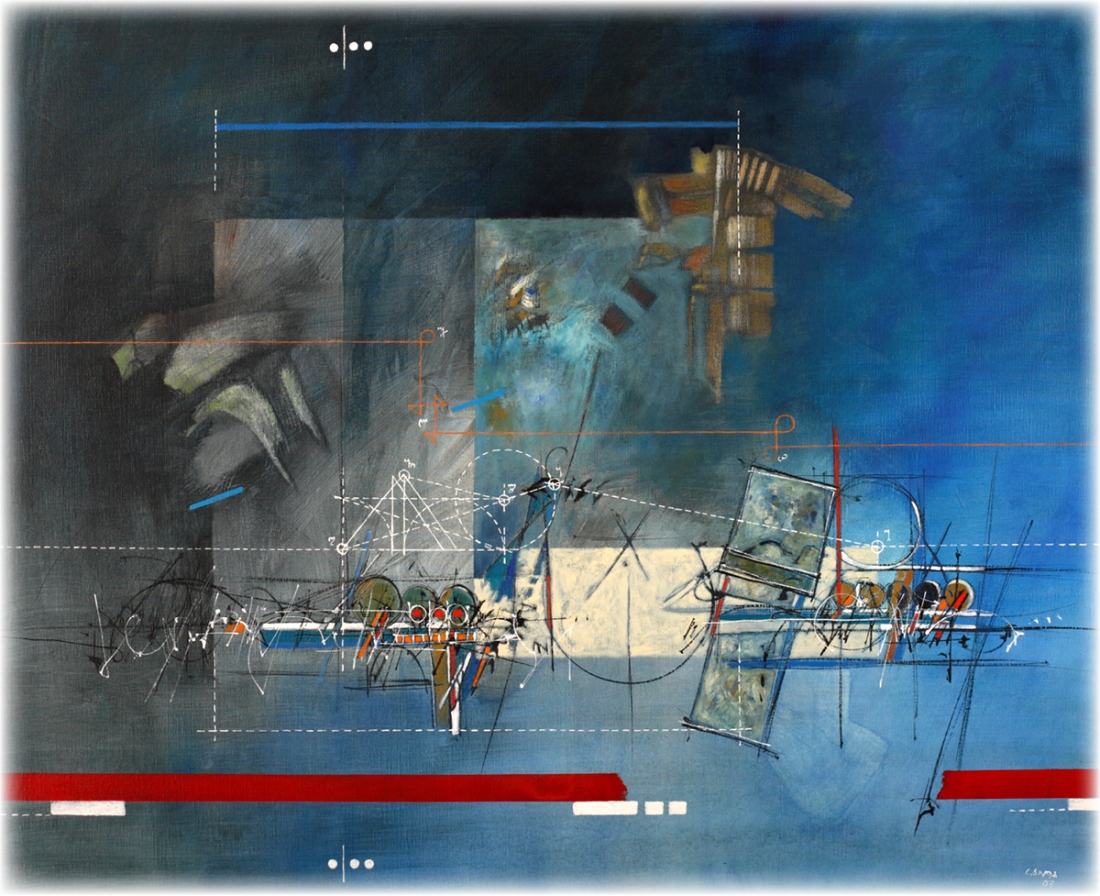
© Carlos Lança
Info sobre horário e bilhetes
16.11
Tue
18:30
RivoliSmall Auditorium
Aditional info
- Price Free entrance
Age recommendation 6+
Additional information French spoken conference with partial translation in Portuguese