Lia Rodrigues
Borda
June
2026
Sinopse
In Portuguese the word “borda” is derived from the verb “bordar”, embroider, which means to enrich, to decorate, to enhance, to elaborate. It stands next to the other meaning of this word: border, fringe, boundary, verge, margin, threshold, limit, barrier, frontier. There are geographic and political borders, sometimes represented by walls, barbed wire, hedges, check points and gates. It can be an in-between place for no one and for everyone, for those who arrive, those who leave and those who linger. Here and there, the beginning and the end, somewhere and nowhere. Who is allowed to cross? Who stays? Who will be kept out? Who belongs and who doesn’t? Who has the right to exist? Territories can also be demarcated by nomadic movements and a mixture of elements, physical and symbolic: specific cultural identities, scents, sounds, language, rituals, distinct survival strategies and knowledge, ways of managing forests and plants. How can we work from a reality intertwined with visible and invisible lines, that mark the boundaries between fear and hope, between noise and quietness, flood and fire. How can we bring with us the land of our visions, desires, memories and futures? Perhaps by patiently and laboriously weaving together a porous place of fluid alterity, an embroidery where margins move, float and dance. — Lia Rodrigues
borders
otherness
belongingness
porosity
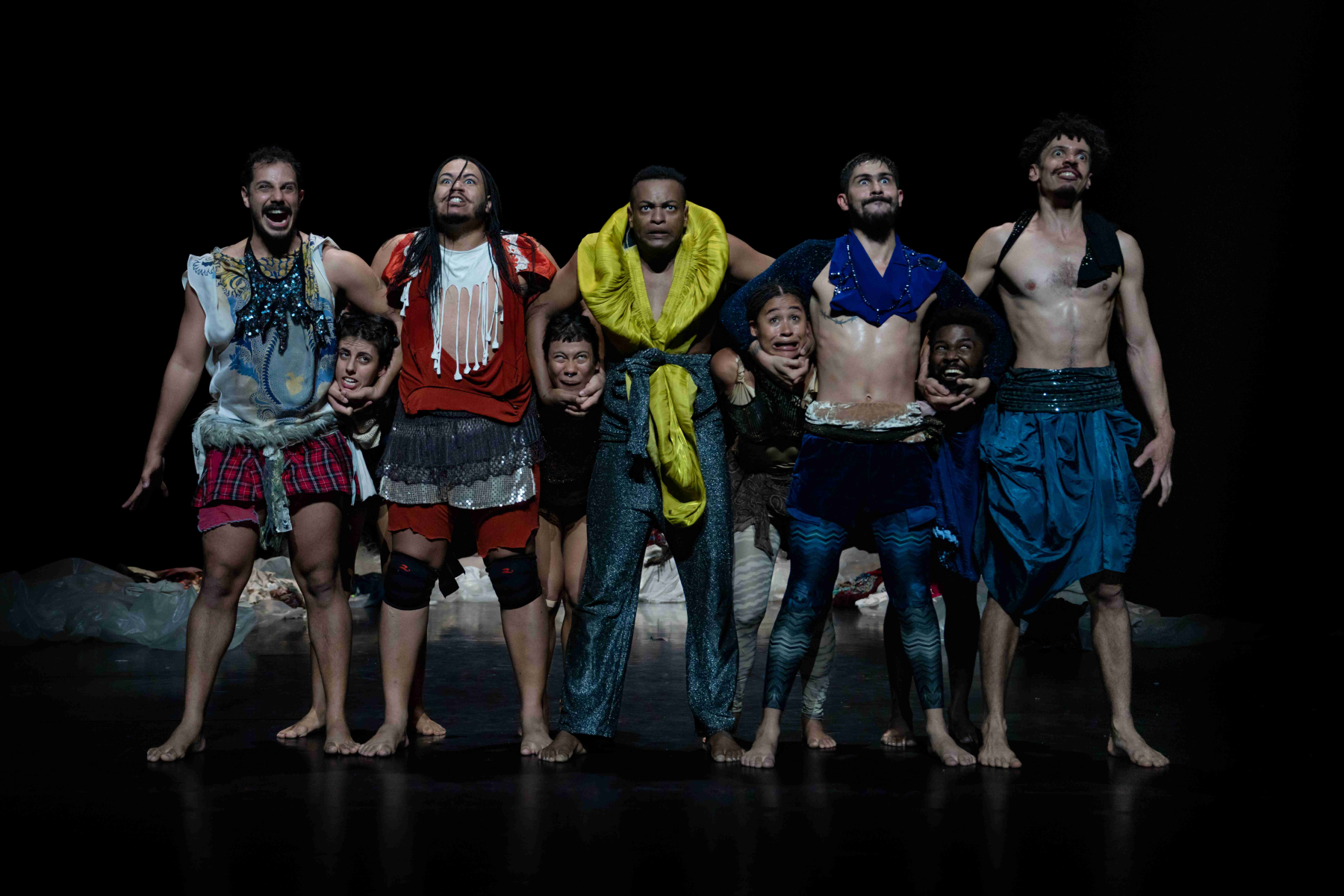
© Sammi Landweer
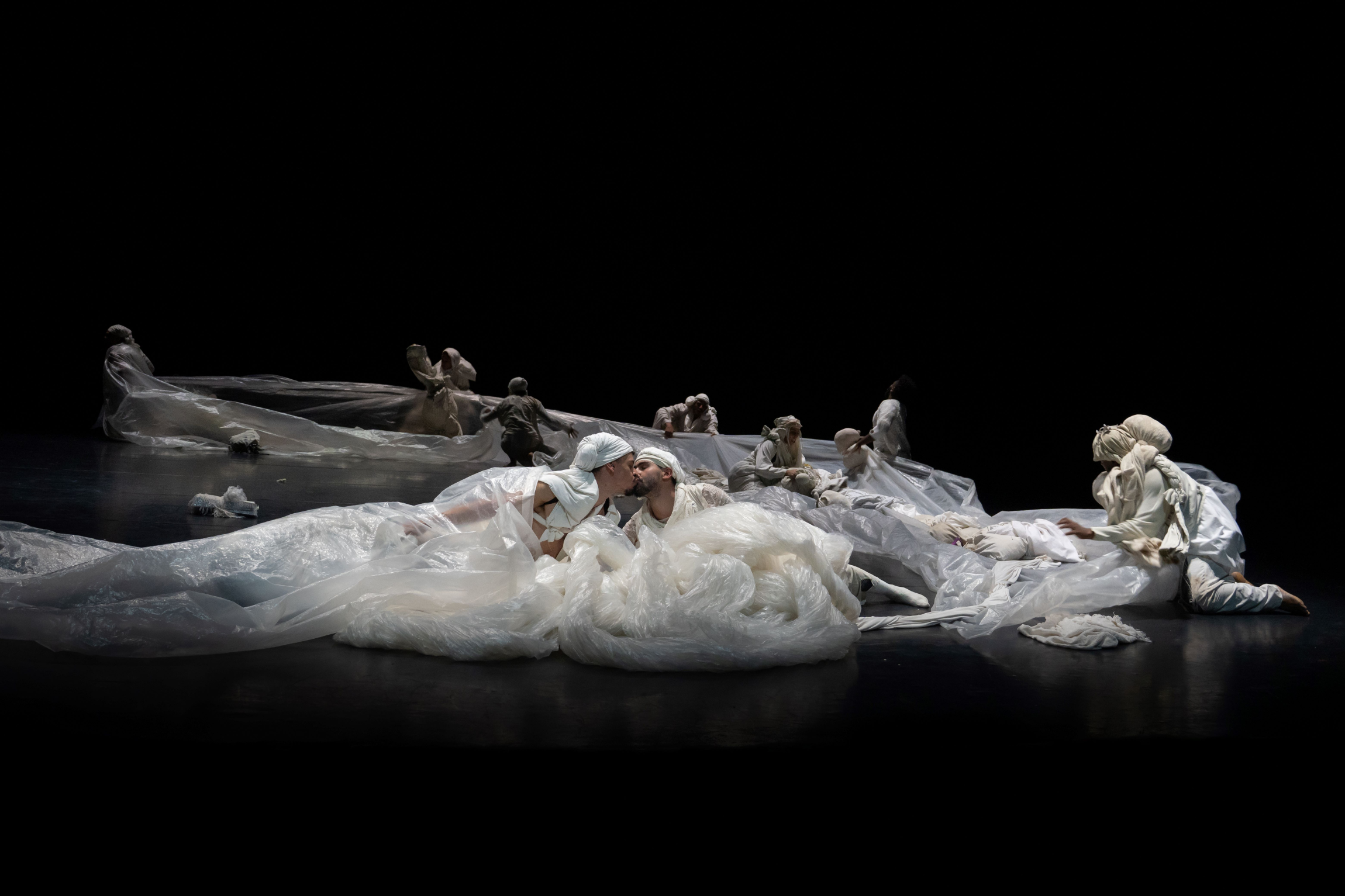
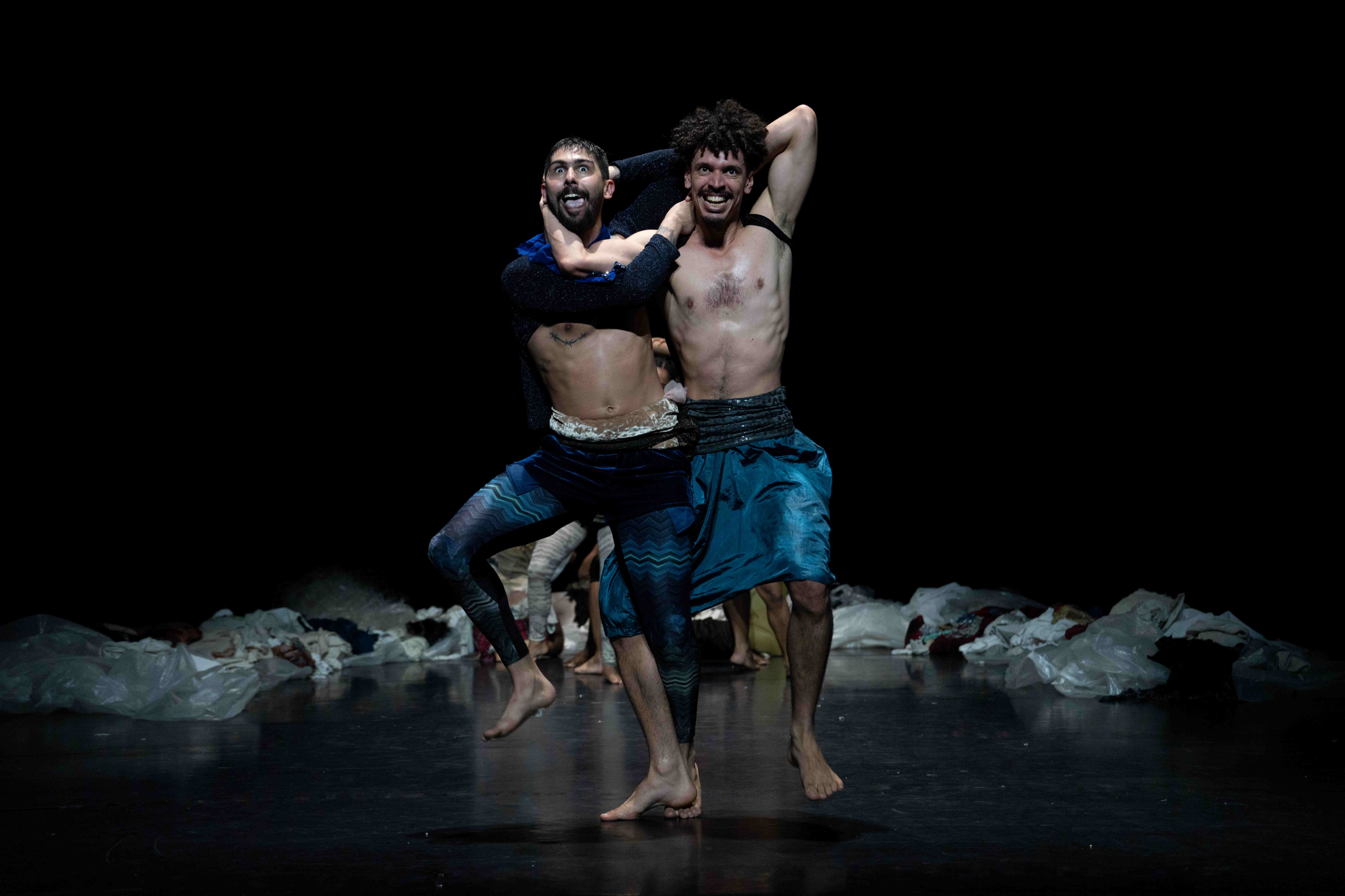
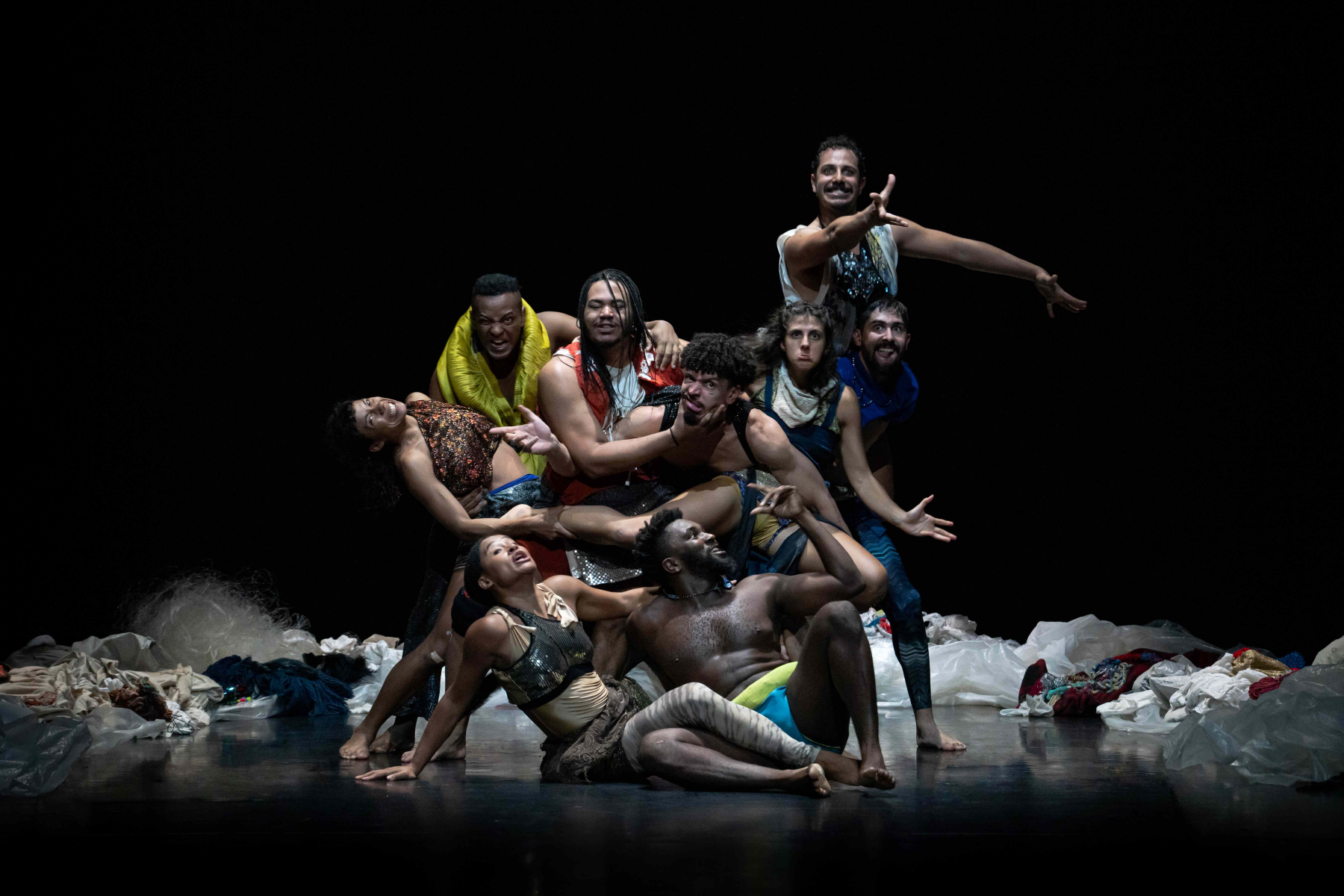

© Sammi Landweer
Aditional info
- Price
12€
-
Duration
1h10
- Age rating
14+
Author's bio text
Lia Rodrigues was born in 1956 in São Paulo. She studied classical Ballet and History at the São Paulo University (USP). In the 70s, Lia was involved in the contemporary dance movement and was in the Maguy Marin Dance Company from 1980 to 1982. When she returned to Brazil, she created the Lia Rodrigues Companhia de Danças, in 1990, in Rio de Janeiro, with activities all year round, dance laboratories, creations, classes and rehearsals. In 1992, she created and run for 14 years the Panorama Festival, the most important festival in Rio de Janeiro. Since 2004, her company has been involved in developing educational and artistic activities in the Maré Favela in Rio de Janeiro, in partnership with the nongovernmental organisation Redes de Desenvolvimento da Maré. In 2009 she opened Centro de Artes da Maré and, in 2011, the Escola Livre de Danças da Maré. During 40 years of professional and artistic life, the choreographer Lia Rodrigues has dedicated herself not only to training and artistic creation with touring and commissioning from the major capitals in the world but also to Education with workshops and seminars all over the world. Mixing militancy and utopias, she believes in the synergy between art and social processes. In 2022, she was awarded by the French government with the medal of Officier de l’Ordre des Arts et des Lettres. She created Formas Breves (2002), Incarnat (2005), Chantiers Poétiques (2008), Pororoca (2009), Piracema (2011), Pindorama (2013) and Para que o céu não caia (2016), Fúria (2018) and Encantado (2021).
Ficha Técnica
Created by
Lia Rodrigues
Danced and created in collaboration with
Leonardo Nunes, Valentina Fittipaldi, Andrey da Silva, David Abreu, Raquel Alexandre, Daline Ribeiro, João Alves, Cayo Almeida, Vitor de Abreu
Creation assistant
Amalia Lima
Dramaturgy
Silvia Soter
Artistic collaboration and images
Sammi Landweer
Lighting design
Nicolas Boudier
Stage management and lighting
Magali Foubert
Soundtrack
Miguel Bevilacqua from excerpts of a recording made in 1938 in northern Brazil by the Folklore Research Mission conceived by writer and intellectual Mario de Andrade and excerpts from the public domain music Amor Amor Amor, part of the repertoire of Cavalo Marinho, a Brazilian dance performed by Luiz Paixão.
- Mixing and mastering
Ronaldo Gonçalves
Administration, booking and production management
Colette de Turville
Head of booking and production
Astrid Toledo
Production and manager Brazil
Gabi Gonçalves / Corpo Rastreado
Secretary and administration Brazil
Gloria Laureano
Logistical support Centro de Artes da Maré
Sendy Silva
Teachers
Amalia Lima, Leonardo Nunes, Valentina Fittipaldi, Andrey Silva
Costumes
Lia Rodrigues Companhia de Danças
Seamstress
Antonia Jardilino De Paiva
Acknowledgements
Thérèse Barbanel, Corpo Rastreado, Inês Assumpção, Luiz Assumpção, Diana Nassif, Centro de Artes da Maré team, Jacques Segueilla
Dedicated to Max Nassif Earp